Posts filed in: Life

Thank You

comments: 256

27NewChair2

27NewChair1

27NewChair3

28Wallpapering1

28Wallpapering2

28UncleMike1

2Whoa3

2Whoa2

2Spring1

2Zoo1

2Zoo3

2Zoo5

2Zoo10

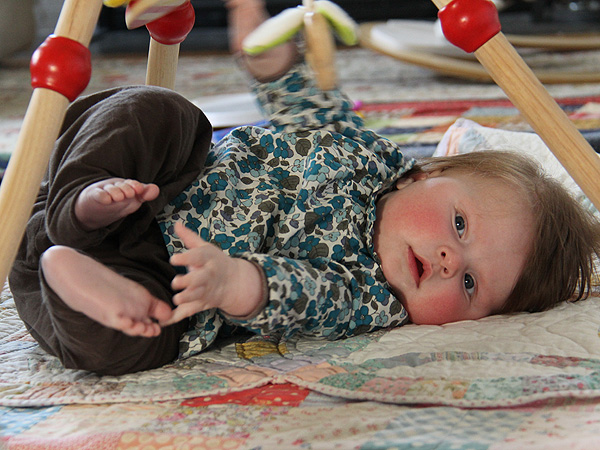
4BabyGym1

4Hoodie1

4Curry1

Whew! Hello!

How are you?

It's a cold, rainy morning, so dark in the house I need all my little lamps on to see. Andy has the day off and is at the park with Clover Meadow and Miss Amelia. I'm sitting in the studio, eating breakfast and drinking orange juice. The rain is plinking on the skylights. I feel, I am quite sure, quite, quite ready for spring. It seems far off today!

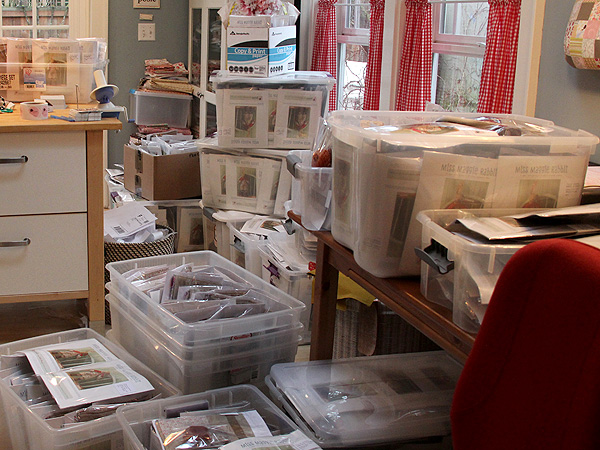
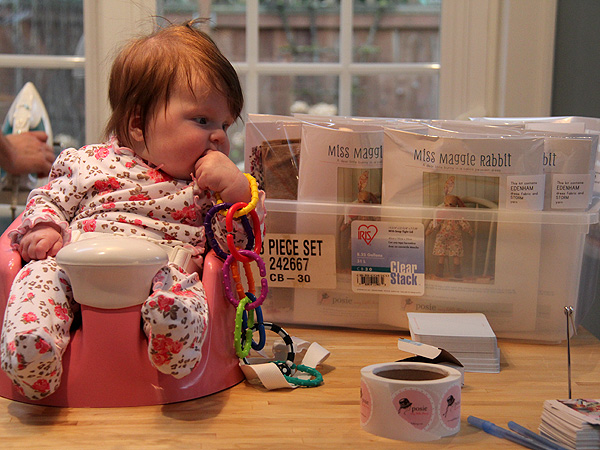
Thank you again for your Miss Maggie orders! It always emotional for me to go through all of the orders and see everyone's names and addresses, and read all of the sweet notes people leave, and think about where all of these kits that we've worked on for months and which have become part of all of our lives here are going. Around the world. It's amazing to me. It brings me so much happiness. More than I probably remember to say. Thank you for that, and for being here all of these years, through many things. Today is actually the fifteenth anniversary of my accident. Posie was just my dream then. I had a lot of dreams then. I cried because I didn't think many of them would come true. Andy always believed that they would. He sees where I am trying to go before I ever do, and is already helping me get there before I even know I'm standing. He's pulled me to my feet more times that I can possibly count, and probably many more times than I've even realized. And then I go forward.

A most amazing man. My love. Greatest partner in life, and the greatest father. Most beautiful, fun, creative, kind, generous person I've ever known. Andy.

Then, Amelia.

comments: 3391

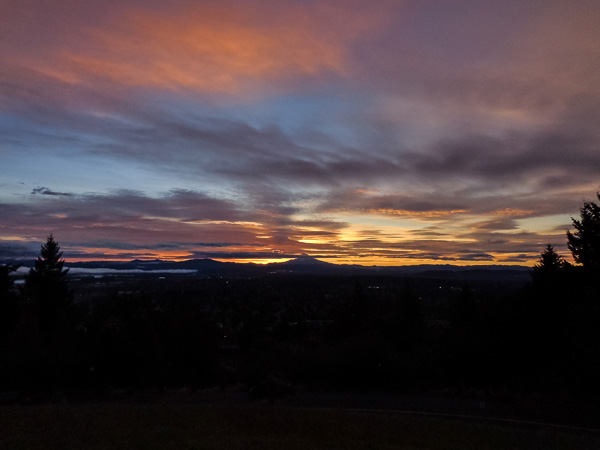
Sunrise1

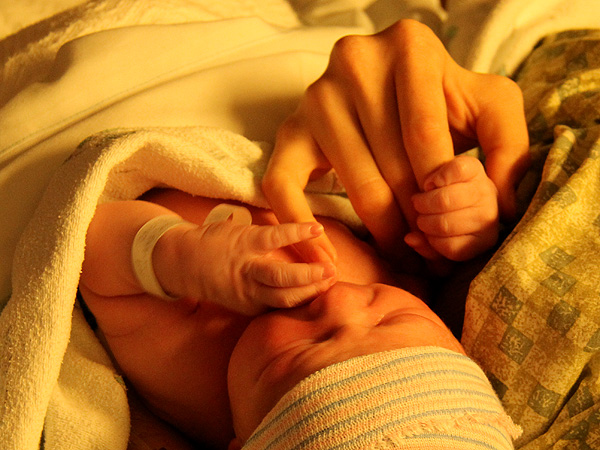
My heart is so full it's hard to speak. We have adopted a baby girl. We were honored and privileged to be asked by her luminous birthmother and her gentle birthfather to attend her birth. That moment, and the four days we spent in a hospital room with them and their family and friends were the most incredible, and humbling, of my entire life. This baby was born into the most beautiful circle of people I can possibly imagine, and both Andy and I are in continuous awe of their tremendous strength, courage, and incredible love. Our gratitude is boundless. Her birthgrandfather took this picture of Mt. Hood at sunrise on the morning of her birth. It made me cry when I saw it on his camera, and it makes me cry now to look at it again. It is a symbol of an auspicious beginning.

Hospital1

Amelia Jolene Beatrix Paulson
October 14, 2012, at 5:42 p.m.
8 pounds, 3 ounces; 20 inches

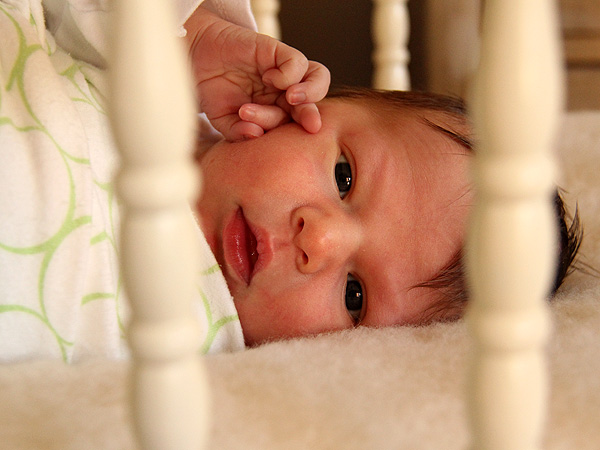
Amelia1

Welcome, welcome, welcome dear, sweet, precious, exquisite, wonderful, wonder-full Amelia. I love you more than I can say.

Cloudy Fall Morning

comments: 106

Puppers3

Hosta1

Hollyhock1

Dogwood1

Harvest2

Heather1

Lilac1

Acorn1

Berlin

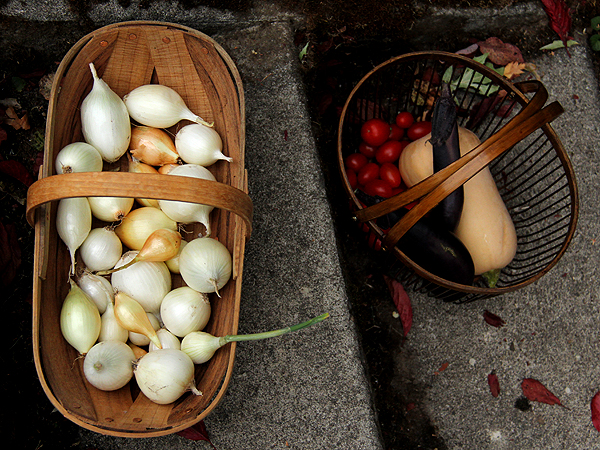
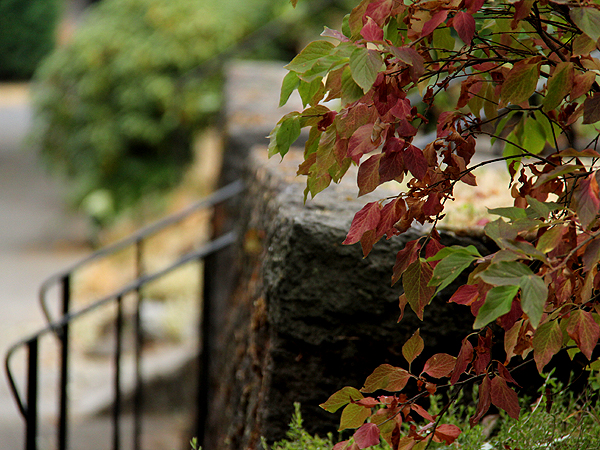
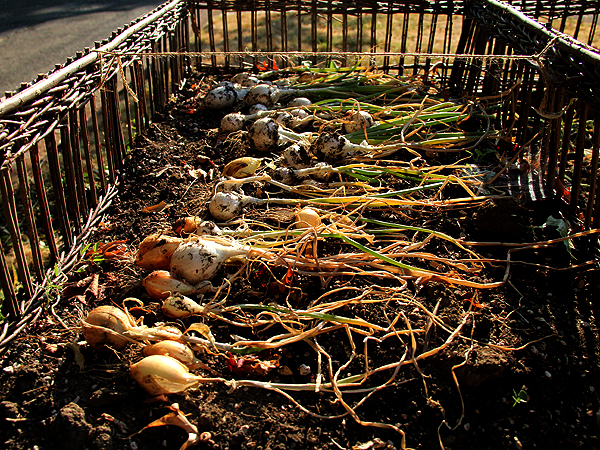
Cloudy, and I can almost feel water in the air for the first time in ever so long. Hallelujah. Happy dance. Suddenly, under the flat gray light, I can see the fall colors. More dancing. I harvested the onions, a couple of eggplants, my precious butternut squash, another smattering of candy-sweet tomatoes this morning. I still can't get over what those tomatoes taste like. The vegetable beds are quite worn out. I thought about watering and decided, again, to let it go. I'm not sure how much is left to take out. Sweet potatoes — I don't think they did much. Carrots — the one I pulled was about the size of one of those little yellow Ikea pencils. This garden was a great experience for me.

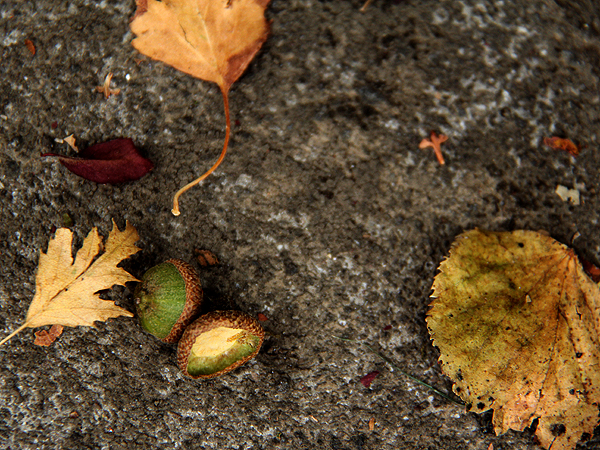
Out there, the sound of acorns falling from the great oaks onto the pavement and the tops of cars. It's the sound of my childhood Septembers. The constant pinging of falling acorns on Forest Avenue. We had so many ancient oak trees there, and that sound of acorns falling, and bouncing, like other sounds from that place — freight trains coming then going, the cooing of an unseen mourning dove in the morning, cicadas, another freight train — is something I feel like I never hear enough. It's a sound you don't remember you've forgotten until you hear it. And it sounds like it's all yours.

I've decided to become a frozen-food person, and this morning put frozen pizza dough and two little frozen chicken pot pies from the bakery (where I go almost every morning to get a chai — kind of a little luxury I allow myself) in the freezer. It felt kind of like the year that my friend Allyson and I decided that we were French and wore stripes and scarves and spoke only Franglais, or the time I decided that I was a ballerina, and stood, whenever still, in fifth position. Or sometimes first position. Usually fifth, so there would be no mistake. This morning I decided that I would be one of those people who cooks things like soups and stocks and chilis and curries in big batches and freezes them in clearly labeled containers, and who then, when she is hungry, takes them out and cooks them for dinner. Eureka! This actually seems do-able. I have very low expectations for myself with meal planning. But this seems do-able. I have a freezer, and electricity. I want to believe.

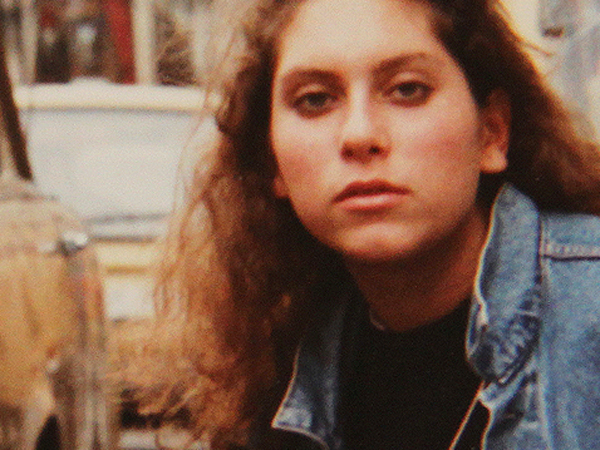
September mornings forever remind me of traveling around Europe when I was a lass. I pulled out my scrapbook from that trip this morning. I haven't looked at it in ages. Photo taken in September of 1990, in Berlin, when I was twenty-one.

Town and Country

comments: 82

River3

River4

River6

River5

River7

River8

MyAvocado1

Dinner1

Onions1

DeckDock1

Gorge1

Gorge2

Gorge3

Lavender1

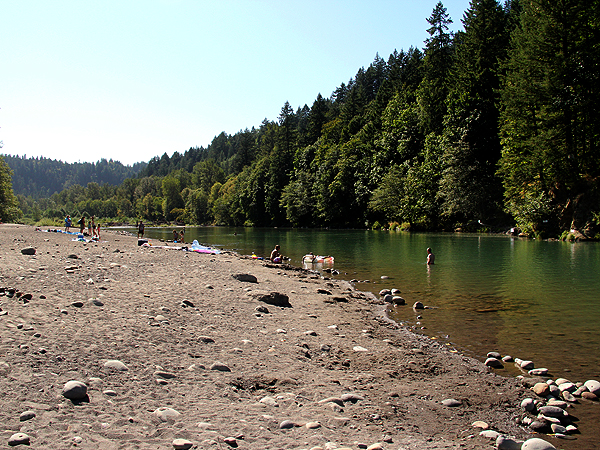
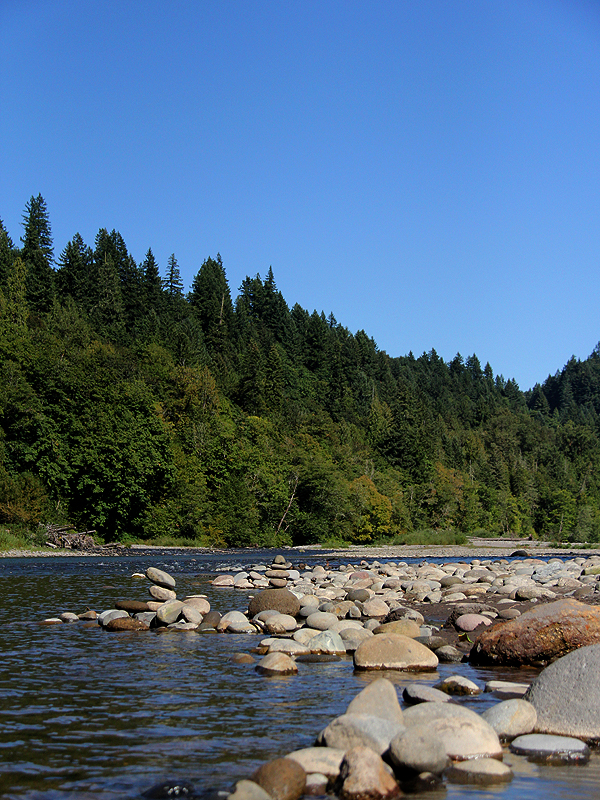
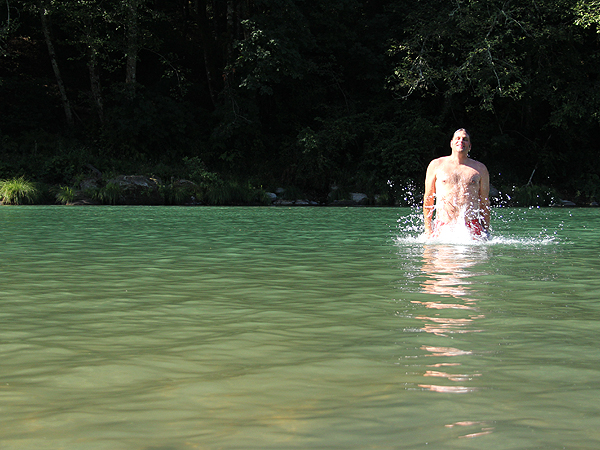
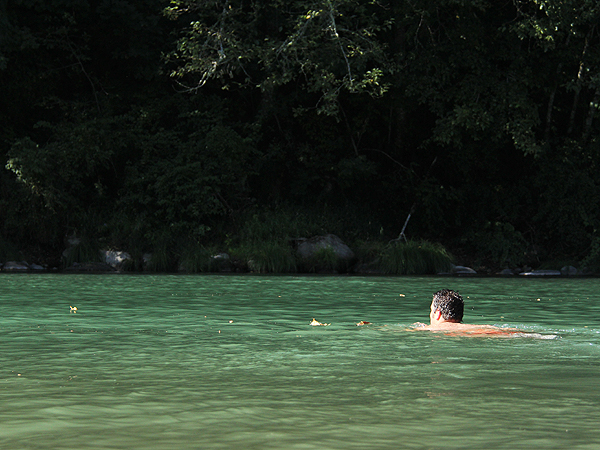
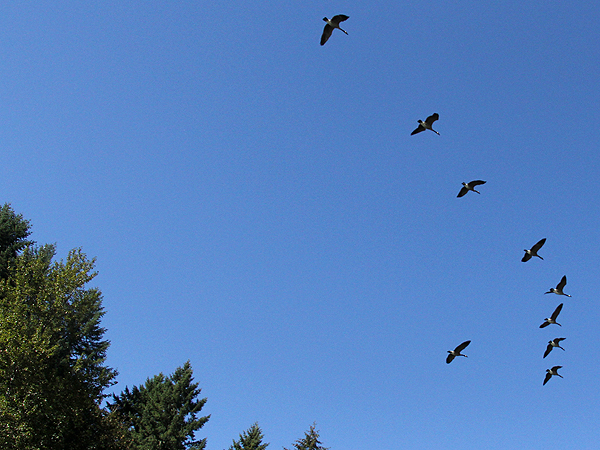
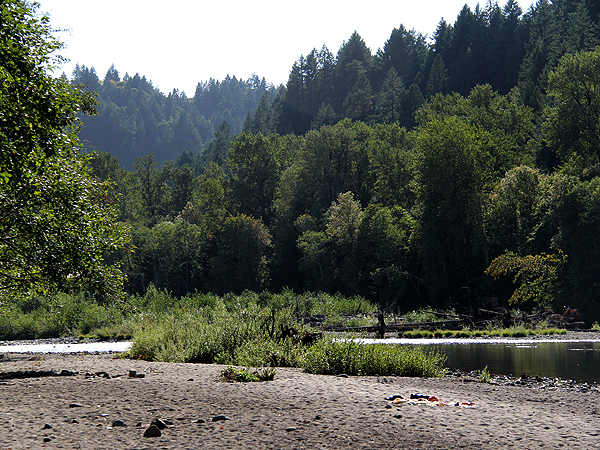
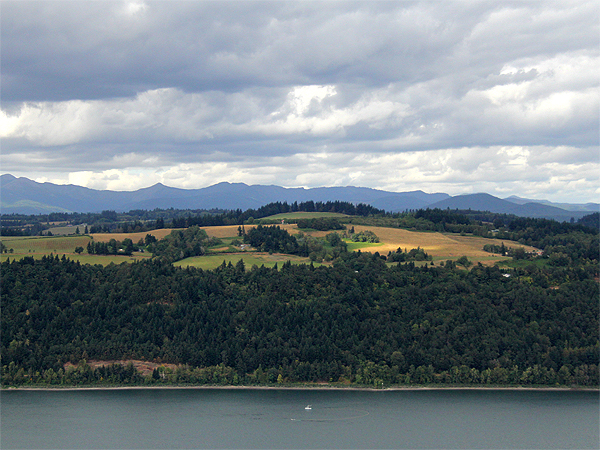
We've been here and there. Ramblers and loungers. A nice mix for me. A little bit of home and a little bit of away for a day. Then home by dinner. Late-summer sunlight. Fields and furrows. Gray layers of light over fuzzy blue hills. Cold mornings and cold water. Regiments of geese fly low over the river, right above our heads. They thread their ways upstream, stopping to rest just beyond the rapids. Four eagles circle high in the clear, sharp light, talking to each other. Yellow leaves flashed silver as they fell. My body warmed the shallow pool of river water in my chair. I dared not move lest I chill it again. He examined stones and skipped rocks the size of salad plates. A river crayfish tried to git me. I insisted it was lobster. But Andy saved me. I have certain fears: going into banks, vinegar, wet cat food (disgusting beyond belief), crustaceans. He does his best, as always. Helping me always. My dear love.

Thank you thank you — for all of your orders, and your kindest words about the new ornaments and the new shop, and all of your gentle kindnesses, and constant generosity, and sweetness here all summer, and always. I feel raggedly sensitive lately, in good ways and difficult ways. I'm disheveled and flushed, a purple and smudgy September plum, ready to bust and ooze at a light touch, taking things personally, and I'll take your kind words personally, too. I'm grateful for them, more than you'll know.

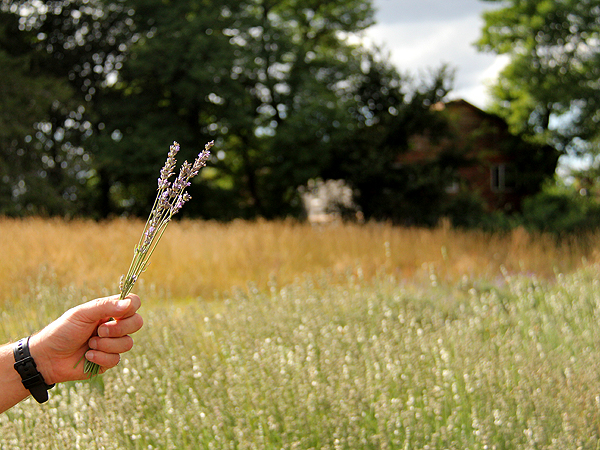
Monday. He picked lavender for me while I sat in an old metal lawn chair with a poufy cushion and ate a chocolate ice-cream cone. Bees and butterflies rushed the blossoms, so many it felt like a fairy meadow. Harvest ball. There was a box where you put your five dollars for a bouquet. A broken-down shed. An ancient apple tree. Across the field, a wooden house. Once I was in the chair I felt like the field felt: tired, wilted, relieved. Four o'clock. Nothing else needed, then, beyond his quiet company and the holy, golden sunlight. How grateful I am for all these things.

In Early Evening

comments: 141

Windows1

Puppers1

Tea2

Mallow1

Celery1

PrettyGirlFromMissoula

Meadow2

Poppy1

MyShadow1

Crochet2

Roses1

Sometimes I miss Montana, miss living deep in the mountains, miss the rolling Clark-Fork River being right there at the end of our street. You could ride your bike in the evening along path at the edge of the river, with the cottonwood puffs floating and the mountains rising and the sound of the water rushing by. Fairy-tale thoroughfare. We once saw an otter on his back, floating under the bridge, right through downtown. We lived there for three years. Everything smelled like pine and smoke, sharp and dry. I miss how small the town was, how bored I could get with it, how much I wished it would rain, how I would wander, lonely, around Butterfly Herbs half the afternoon, drinking smoothies and hoping to run into someone I knew. I was haughty and fragile. Intimidated. I tried to learn to knit and practically had a nervous breakdown. The leaves crunched dry in the Rattlesnake. I liked the path along the creek in Greenough Park, the little bridge there, the weeds and wildflowers that grew in the front yards of houses near the railroad tracks on the north side of town. Everything was glinting and strange, the light different, clearer and more harsh than it had been in Illinois. I didn't own a car. I taught tried to teach college freshmen how to write argumentative essays. After the first semester I prohibited all argumentative essays about legalizing pot (this was a favorite freshman topic; there are only so many why-marijuana-should-be-legal thesis statements you can read without wanting to clonk stoner freshmen heads together, which I assume is also illegal). We had no money. On the last morning of the month I scoured every pocket and looked through every book bag in the house, trying to find enough change to get a cup of coffee on my way to school; no luck. Found a dollar in the snow, right in the middle of the street in front of Food for Thought, and could hardly believe it. We babysat for a lady with two little boys, one of whom couldn't speak. I still remember his name, and how sweet he was, how she cuddled him, how he liked to watch the movie Fantasia over and over again. I worked at Penney's in the home dec department, and folded fluffy new towels into thirds (strangely satisfying). Andy worked in a rock quarry. He would drive out and pick me up in the truck after work. We went everywhere, so happy to finally be living together, giddy with this. It would stay light so late in the summertime. I remember one night when we were walking home late from the bar and this guy on a bicycle suddenly flew past us and nailed the curb head-on, knocking the chain off his bike and himself flat. He jumped right up and, totally hammered, tried for several minutes to nonchalantly ride the bike with the chain clanging and hanging like a necklace around the pedals (pedaling furiously, going nowhere). Then he crashed straight on through the underbrush of the embankment and disappeared. Andy and I stared at each other in amazement — what in the heck? — and fell over laughing. I remember the hollyhocks that bloomed all down the alley between our apartment and the Orange Street Food Farm, the teetering platform of wooden boards Andy built for Violet so she could jump into our window from the dark green tangle of our side yard, the way that the sun set pink behind the purple mountains, so pretty it could make you cry.

Silver Snow

comments: 234

SilverClara5

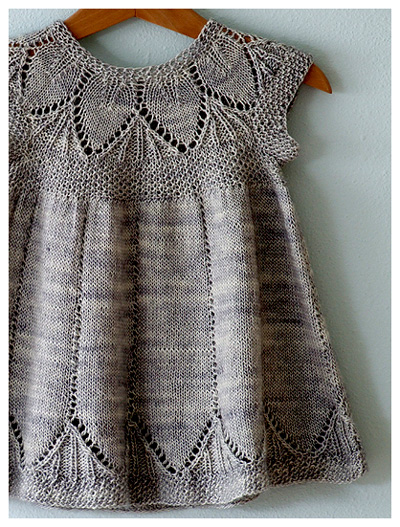
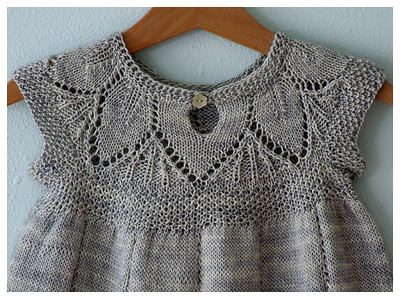
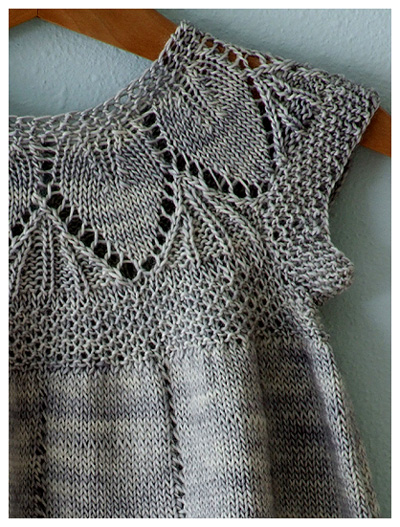
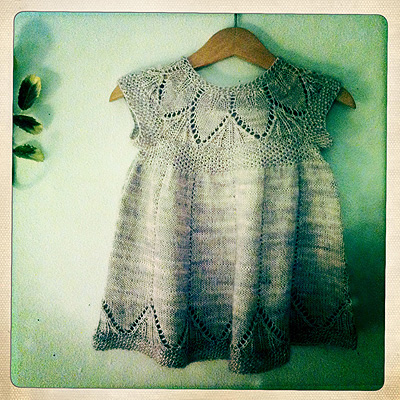
PATTERN: Clara by Karin Vestergaard Mathiesen
SIZE: 12-18 months
YARN: Madeline Tosh Merino Light in Silverfox

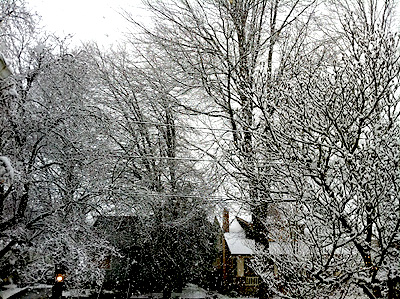
Thank you very much for sharing our walk with me yesterday. It was really a very magical day. By nine a.m. all of the original morning snow was gone and the sun was shining as if there had never been a cloud (or a snowflake) in the sky. But then, later in the afternoon, the whole thing started up again: Tiny flurries buzzed the yard, and then larger flakes started to fall and stick, and then a full-blown snow squall enveloped our neighborhood. Clover and I sat on the sofa and watched from the window; it was like being in a snowglobe.

Snow14
Taken from our living-room window, around 3 p.m.

Oh, how my heart twirled! It lasted maybe another hour. All the little girls across the street came out and threw snowballs at each other and chased each other through the yards. They reminded me of squirrels, playing up and down the oak trunks, wild in their delight. It was the lovliest of days. I really don't think I'll ever forget it.

SilverClara4sm

I finished this dress last month and for some reason just never got around to posting about it. Apparently I was waiting for a fairy-tale snow to come and enchant me with its charms; the entire time I was working on the dress it seemed like a fairy-tale dress. When I finished it I was simply flabbergasted that I was able to make something like this. It felt conjured more than knitted, though I knew that there were parts of it that had been so hard, where I'd had to rip out and redo more than once, where every stitch was hard-won and utterly prosaic. But I couldn't remember where those parts were (and I definitely can't remember now). (Lord, please let that be a metaphor.) I just sat and looked at it for a whole night. I kept shaking my head. Really? How did I do that? Since I don't even really know how to knit?

SilverClara7

That's sort of what I've been telling myself all these years, anyway. Knitting was so hard for me, and came so un-easily to me, that even though I've been able to knit and purl more or less without complication since about 1999 (I started trying to learn back in 1994 or so), I still never really think of myself as someone who can knit. I know that's strange, and not meant to sound falsely modest, but it's true. That is my perception. A year ago I wrote the story of how I eventually learned to knit. I think it is one of a small handful of things I've written in my life that help me tell the story of myself to myself. Eventually I will amend it to include what knitting has meant to me this past year. This dress will figure into that part of the story, how the whistling work of these days and their many stitches gave us hope and happiness. And confidence, when it was sorely needed. When I finished the dress, I hung it on the wall next to the sparkly lights on my side of our bed and we looked at it for a long time. For someone who doesn't know how to knit, I will admit that I felt very proud.

SilverDress1

*For those who have asked, you can buy a kit for the dress from the US yarn distributor here. I bought the kit but didn't use the recommended yarn. Unfortunately I don't know if the pattern is available on its own; I have called Isager to see if it is and have not heard back. I am sorry but that's the best I can do, as this is just something I knit for myself and is not my original pattern to distribute or otherwise make available. You will have to contact Isager with any questions about the Clara dress pattern. Thank you for understanding.

**Update, 1/4/2014: The pattern is now available here: http://www.yarncupboard.com/shop/clara-dress-pattern

Influences

comments: 152

Seamstress
Seamstress

Thank you for all of your kind comments yesterday, and for just indulging me, in general. Talking about your process is sort of like telling someone about the dream you had the night before: You're sloshing through, explaining as much to yourself as to anyone else, trying to put your finger on exactly what it was for a moment, in case there's something there you might need to know. . . .

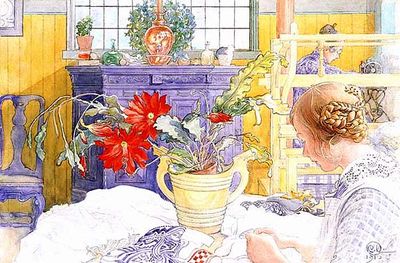
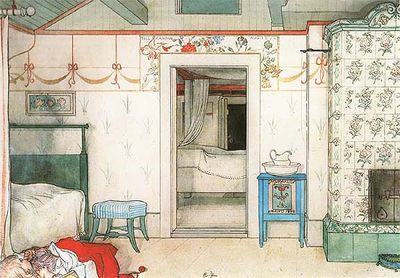
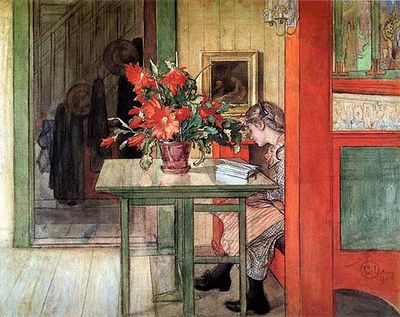
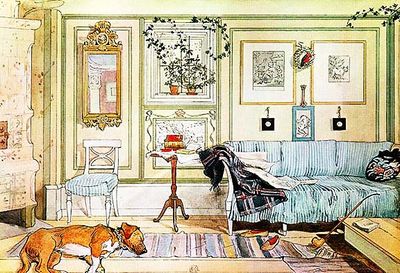
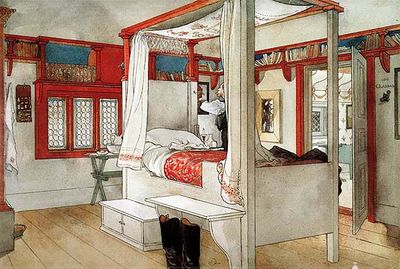
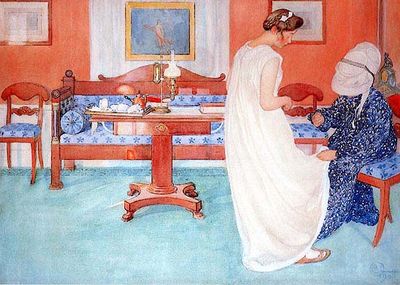
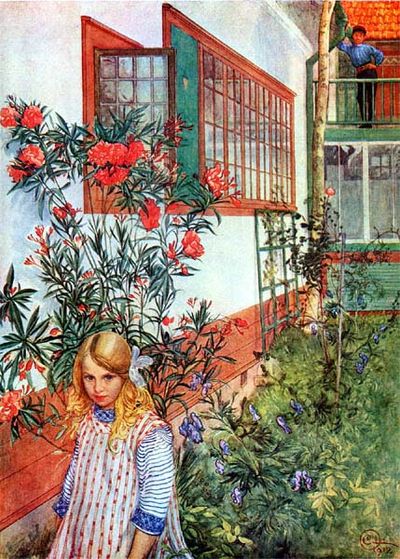
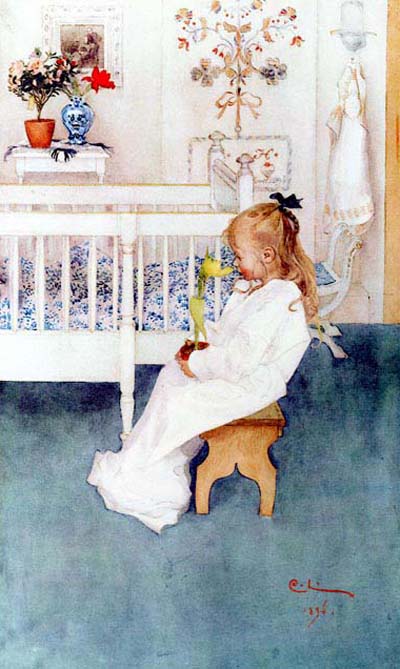
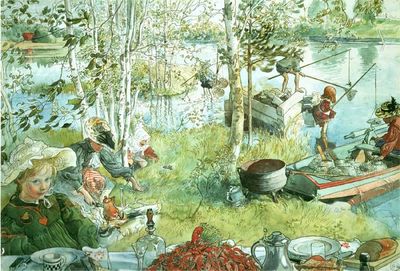
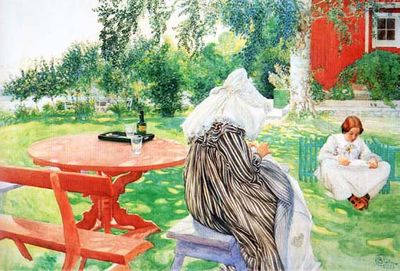
As I've been scoping out the house for locations—almost all of the photos for this book, like my first one, will be taken here in our house, with our own paint colors and furniture (with all its nicks and scuffs), with our own stuff propping shots, with our own beds and chairs and cups and pup in the background—I've been noticing how much the paintings of Swedish artist Carl Larsson have influenced our home, and my sense of the spaces I try to create.

BritasLittleNap
Brita's Little Nap

I first encountered the work of Carl Larsson (1853-1919) when I was a freshman at Augustana College in Rock Island, Illinois, the small liberal arts college that both Andy (and his mom, his dad, his sister, his aunt, his grandparents, his great-aunts and uncles, and maybe other relatives I don't even know about) and I went to and where we met, almost twenty years ago now (egads).

(I should pause here to say how much we love like LOVE loveour school, and what a special, awesome place it is in too many ways to count, if you're looking for a great school to go to or to send someone to.)

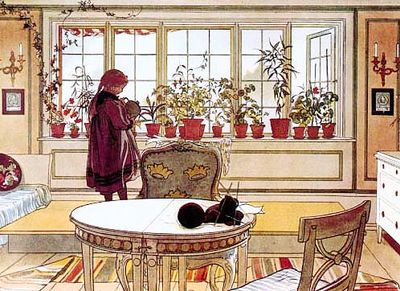
Tucked into the hills on the east bank of the Mississippi River, Augustana was founded in 1860 by Swedish settlers, and its Scandinavian heritage is keenly felt in every aspect of place, from philosophy to decor. I was raised in an Italian-Catholic family, but my father was a Scandiaphilehe maintained a lifelong interest in Norse legend and culture (our dogs were named Odin and Loki), and his childhood best friend (my godfather) was a Swede, and it was my dad's idea that I go to school at Augustana. I just wanted to go to a small, pretty school in a small town. But people said it was a good school, and when I visited it seemed very nice, and it was very pretty, so off I went. One day, early on, in the bookstore I found a postcard:

FlowerWindow
Flower Window

Though I had never heard of the artist, I thought it was such a sweet painting, and for years I had Flower Window hanging on my bulletin board. (Years later I realized that if anyone has seen one of Carl Larsson paintings, there's a good chance it's this one!) At Augustana, I wrote my senior thesis on the painters Arthur Rackham and John William Waterhouse, and in that I explored how the domestic detailsthe calicos and cups and saucersin those artists' paintings contributed to the realism part of the magical-realism they evoke. I was always interested in this notion. I need to look for that paper and see if I still have it. It was a year-long research project that I really loved writing.

There was a big bay window filled with geraniums at the south end of the hall on the first floor of Old Main, and that's where the English Department was. I worked as a student assistant for all four of my years there. I loved the department secretary, Joan Robinson, light as a bird, full of nervous, flitting energy and a million belly laughs. She had been there for many years, and was older than my own mother, but we hit it off fantastically, and my friendship with her and many of the English department faculty was a huge part of my happiness at school. Grinning, twinkly eyed Dr. Tweet (who looked like a character in one of the folk tales he loved, and who once, when he was cleaning out the garage, gave me the best three-speed bicycle I have ever, ever had) held court most afternoons on the sofa outside the departmenthe had a huge fan club of students and professors alikeand he tended the ancient geranium collection, and taught me that the plants liked to dry out and then be given a nice, long drink. I see now that he was probably conjuring Larsson's painting. It was always warm there. It was always quiet, and friendly, and filled with laughter, and learning. When I think of some of my happiest times, I think of that bright corner, and those flowers, and those friends, and how my life changed then.

LisbethReading
Lisbeth Reading

Though the years, and especially now that I am so far from that time and that place, I see that Larsson's paintings have heavily influenced the kind of home I have tried to createthose delicate, clean colors; the many blues and greens, always punctuated by red; the windows; the tiny details that seem to matter; the people and pets given space to linger; the warmth and calmall those things so vital in Larsson's paintings seem to guide my vision of homemaking.

LazyCorner
Lazy Corner

PapasBedroom
Papa's Bedroom

Bridesmaid
Bridesmaid

Ingrid
Ingrid W.

LisbethWithYellowTulip
Lisbeth with Yellow Tulip

Crayfishing
Crayfishing

By his own account, Larsson had an atrocious childhood, filled with poverty, neglect, and hardship. At age 30, he married artist (and skilled needlewoman) Karin Bergoo, and five years later her father gave the couple a small house, Lilla Hyttnas (Little Furnace), in the country. I love this description of how the house came to be the Larssons. Carl and Karin would have eight children of their own, and go on to lovingly design, add on to, and decorate the house for the next several decades, making it one of the best-loved artist's homes in the world. In hundreds of watercolors, Larsson documented the everyday domestic activities of his family and homelife against the backdrop of Lilla Hyttnas, and in those happy images it's clear that the house is both his canvas and his muse. I love this ideathat place, and space, can change your lifeand I know it is true for me, as well.

InTheGarden
In the Garden

I didn't really realize I was doing it, but when I looked at all of the photos from the shoot, I could see that in some way I'd been channeling, and pulled out my Larsson books to look. Sure enough. I see it, and am pleased. All those influences surface, like watching a photo in the developing tray: I come from places, and people. I see them there.

Lovely, dark and deep.

comments: 271

WinterWoods34

Last month, when we went to the art museum to see the photography exhibit about the Columbia Gorge, I bought a book in the gift shop called Portland Hill Walks: Twenty Explorations in Parks and Neighborhoods by Laura O. Foster. I started to read it that night, and immediately began conspiring with myself to take Walk #1, Willamette Heights to Balch Creek Canyon Loop.

WinterWoods33

I got pretty emotional when I was reading the book. I knew that something was changing for me because of it. Before my accident, I had been a walker. Walking defined so much about me. I can't explain to you how much I loved it. I tried one time to explain, but I don't know that I really got it right. In the years since 1998, walking has had to be replaced by other things that don't cause so much pain, or, worse, risk the fragile tissue we've worked so hard to regrow, but the urge to do it never goes away. Lately I have been desperate to get back to the woods, a place I grew up in; I didn't even really know how much I was feeling it until I was in bed one night a few weeks ago, reading the book by the glow of my tiny nightlight, and I started to cry.

WinterWoods12

That was sort of a clue.

WinterWoods13

But I think they were really tears of relief, in a way: The book had arrived.

WinterWoods14

It's a book of walks, joyfully (you can tell) taken, carefully detailed, lovingly described by Ms. Foster. She has a writer's sensibility, and writes like a dream, but she is also herself an editor, and editors have that uncanny ability to focus intensely on the small stuff — there are excellent maps, precise mileage counts and elevations, and very well indicated directions — while never losing sight of the big stuff: Historical information, fascinating anecdotes, and geological descriptions place you squarely in the context of the physical place you're walking through.

But what was different about it for me, as I looked at the maps and calculated the elevations and imagined the terrain based on her descriptions, was that I felt as if I were walking it as I was reading it, or at least I felt confident that I would responsibly know what I was in for if I walked it — if I went off-trail like this — in a way that maybe only the compromised can really appreciate. "Know" in a way that inspires confidence, and makes you think you can just begin. A small, private victory that may be different from most, or not something anyone else can imagine, or, at least, seems like less than they'd expect from you. But you know. You know you've scored the chance to change. And it feels like grace, something suddenly bestowed.

WinterWoods3

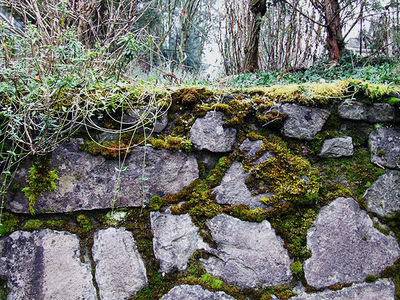
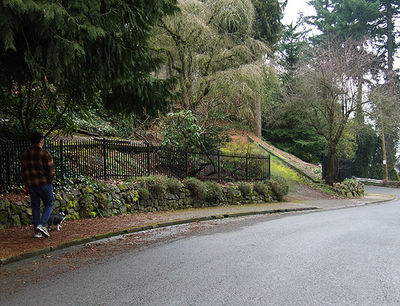
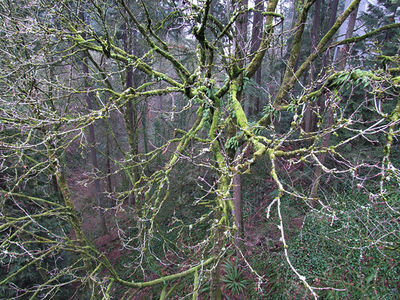
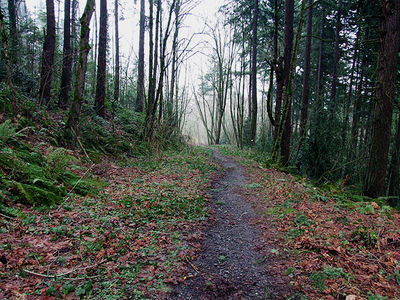
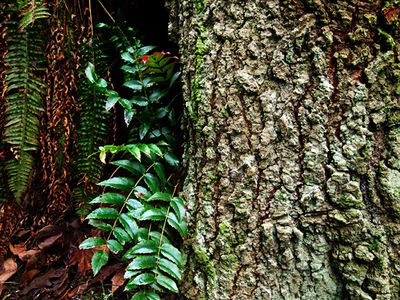
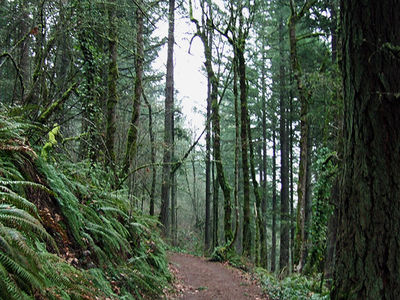
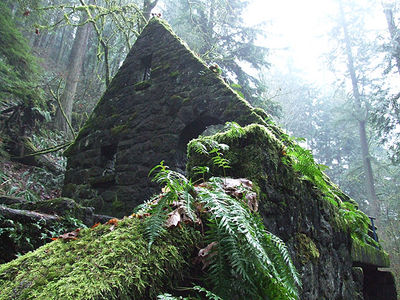
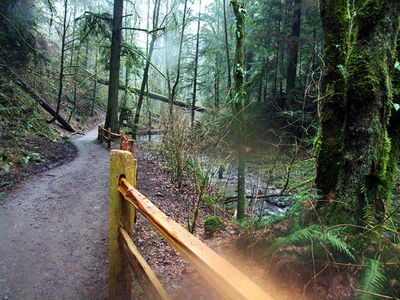
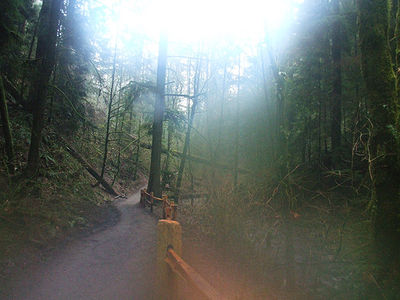
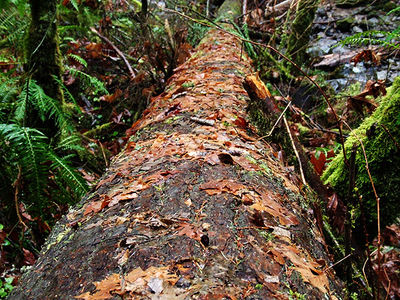
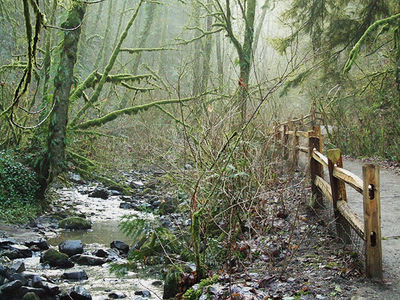
On Saturday, we went. Through neighborhoods we never knew existed (though that's not saying much, since we tend to circle the well-worn paths around our own quite happily, being both homebodies and creatures of habit) and on wooded paths we couldn't have imagined, Andy and Clover and I spent this misty, late-winter afternoon lost in slow steps and shared wonder. We felt very far from home, though, amazingly, we could look down and see the brew pub where we had dinner last week, the gleaming port, the river we cross every day, just below. What smells, of wood and water and hidden things, were these? What light, through this odd, fir-treed filter? Where were we, here on the green-fringed edge of the eleven-mile-long Leif Erickson trail, built in 1915 and planned as a conduit between several yet-unbuilt subdivisions named, optimistically, Maybrook, Ridgewood, Regents Heights? They would be abandoned and later forfeited to the city, since the dramatic, ravine-crossing road was doomed to repeated washout.

WinterWoods4

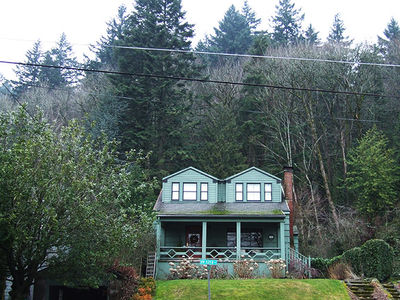
Whose house is this, huddled into the hillside?

WinterWoods5

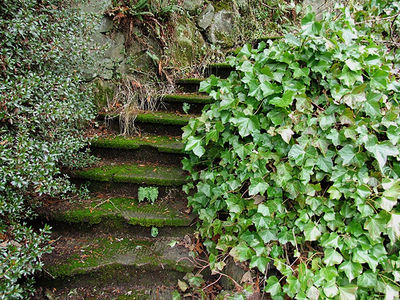
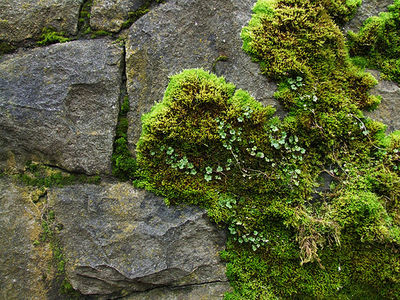
To what secret place does this mossy-soft stairway lead?

WinterWoods6

Why has it taken me so long to get here, or is this, in fact, just the right time?

WinterWoods17

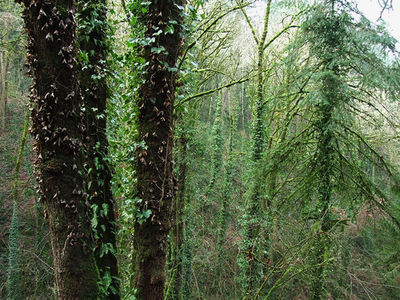
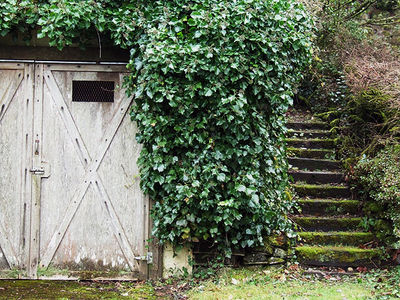
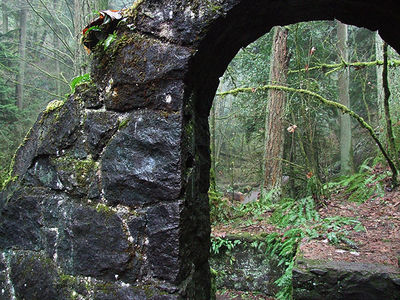
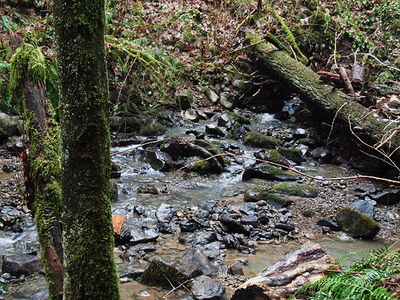
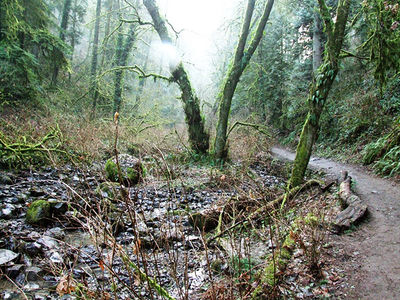
In and out of woods and neighborhoods we wove, shocked to find that the line between the two was blurred and indistinct (and, frequently and unfortunately, covered in invasive ivy). From the stately, enormous old homes and hushed, sleepy streets of Willamette Heights, we made our way down to the Wildwood Trail and into Forest Park, past the site of the old dairy, past mushrooms as big as dinner plates, and further into Balch Creek Canyon, which, according to the book, was named after Danford Balch. He had once owned the surrounding property and was hanged in 1859 for shooting the man who had married his fifteen-year-old daughter, while she (and five hundred other) Portlanders watched. As it turned from afternoon to late afternoon, we wound our way down to the creek.

WinterWoods19

WinterWoods20

WinterWoods21

WinterWoods18 

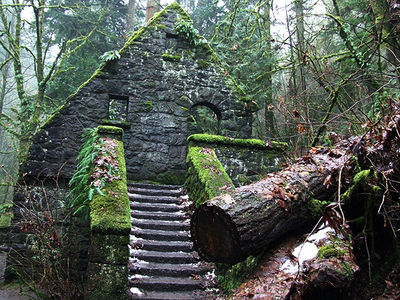
Around the bend, a witch's house.

WinterWoods22

WinterWoods23

WinterWoods24

WinterWoods25

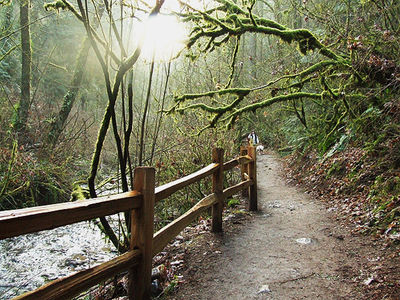
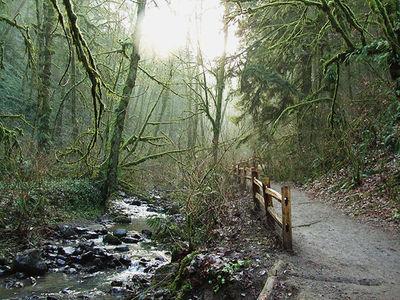
At the bottom of the canyon, toward the end of the loop, it was busier, more developed (a bright, new fence lined the path), and colder, and my lens started to fog up, which has never happened before.

WinterWoods26

WinterWoods27 

Or else, the place is really enchanted.

WinterWoods28

WinterWoods29

WinterWoods30

WinterWoods31

Makes you wonder.

WinterWoods32

It is for me, anyway. It was almost 4.5 miles in all, and I made it the entire way.

Scenes from a Dogwalk, Late Summer

comments: 83

Dogwalk1Oh, we did have fun, Audrey and I. We walked all around our little neighborhood yesterday, checking things out. It was pretty sleepy-quiet out there, just the way we like it. This is our neighbor's dappled driveway. I love scenes like this. All these photos are of things a few blocks from our place.

Dogwalk2One of my least favorite and most-lingering effects of being run over by a truck has been losing the ability to walk around the neighborhood the way I used to. As a child and teenager and even when I lived there for a couple of years after college, I walked every inch of my hometown. I had skipped, ridden, galloped, sauntered, slapped my way down Forest Avenue a million times, probably two million. I did not own a car until I was thirty years old. I walked everywhere, in every kind of weather, like a mailman. One snowy, cold afternoon, my next-door neighbor, that lovely, soft-spoken, grandfatherly Irishman Joe May was pulling out of his driveway and saw me walking to work (two miles away), asked if I wanted a ride. Oh no, I replied, cheerily. I have plenty of time. He shook his head, chuckling, and said, "You are crazy. Beautiful, but crazy." It was one of the best moments of my whole life. I mean, I already knew I was crazy. I didn't know about the other thing. I was warmed all the way across town.

Dogwalk6 When I was growing up, I spent a lot of time out of my own house, dreaming of other houses. I didn't know that I lived in a special town. This was Oak Park (and River Forest), Illinois, home of Frank Lloyd Wright and dozens of his houses; they litter the place like exotic butterflies, but your friends live in them, they're just places you walk past on your way everywhere, school, the library, the bakery. I mean, it's completely outrageous, how pretty those houses are, how magical those streets. In my pedestrian travels around OPRF, I noticed every yard, every front porch, every flower planter, every lightpost, and took copious mental notes. In my anxiousness to escape my own and live in any other house, I bundled parts and pieces of all the houses that I saw and created imaginary ones of my own; my fantasy houses were sophisticated and extreme, filled with dumbwaiters and Prairie-Style great rooms and carriage houses in back gardens, and trees growing straight up through living rooms.

Dogwalk9 I know that working on these "houses" saved my life, for I did feel that I was working as I was walking. I knew, I just knew, there could be a better way, that spaces could change everything, that someday I would be old and get to leave and be in charge of atmosphere. I would not let anyone smoke in my house. I would make people go to bed at regular times, and there would be nice sheets. I would never, ever have blinds closed during the day. I would give everyone a little table of their very own, at which to do whatever kinds of things they wanted. I would actually care if the residents of my house were unhappy.

Dogwalk7 I'm all grown up now, and have my own dear little house. It certainly doesn't have a dumbwaiter — it doesn't even have a garbage disposal — but it is very happy. I knew it could be, and I was right, I was so right. Your space can change your life. I still love looking at houses, though. Our little neighborhood in Portland, where these pictures are from, is a mix of big old houses and squatty little cubes and overblown gardens and dried-up yellow lawns. It's full of working families and shared driveways and shabby apple trees that drop their gloppy packages on the sidewalk, and nobody, including us, bothers to clean the stuff up. There are gargantuan roses and vegetable gardens planted in front yards and sagging moss-covered roofs and peeling paint and entire sun-blasted streets where the tree trunks are only four or five inches around. And there are streets with big old oaks that make me feel like I'm back home.

Dogwalk10These are the first pictures I've ever taken around my neighborhood, for some reason, though this is our familiar dogwalk route. That brick house up there is my favorite. It actually doesn't fit in the neighborhood at all, I don't think — it's much too fancy and well-kept for our crowd. I drive past it every couple of days to see if they've put a "for sale" sign out front. I've told Andy that the minute they do I'll sell everything I have in order to get it. It's a joke, of course; we could never afford that beauty. But I do like to go by and say hello to her when I can. I think she's just lovely.

Dogwalk12_1 God, I miss walking. It's a different experience now, with the crap foot. It's like the walking itself, the steps are the real thing, because they hurt and you feel them. Before, the walking was nothing, automatic in that way; I never thought about the action itself. It was the invisible vehicle that allowed me close access to the houses, and gave me time to think. And now the houses are sort of there, but they're secondary to me counting steps in my mind — how much farther can I go before I need to turn back. You must stop when you've reached the halfway mark, because the way back makes up the second half of the steps you get to take. But, whatever. That's life. You can't stop walking, even if it's not the same. But oh! the luxury of the un-noticed, un-felt step!

Dogwalk3_1 I think about the people displaced by Hurricane Katrina, all those suffering war and dire trouble, soldiers in bunkers, children in unhappy homes, refugees without places to rest, and I feel such panic on their behalf. Sometimes when I'm out and I've walked too far, and am worried about whether my foot will make it back home, I think of them: that feeling of being caught out in elements, at the mercy of the home-ful, dependent, out of place, trying to get back, looking in every glowing window and knowing it is not your own, the flickering room on the other side as far away, as untenable, as the sun, all forms of warmth and comfort.

Dogwalk15_1 When I was eleven I loved a book called My Side of the Mountain, about a boy who runs away and lives in a hollowed out tree with a pet falcon. I read it over and over again. That same winter my dad and I found a little hand-built house in our urban forest preserve, hidden by snow in a grove. Someone was living there, just like the Boxcar Children, though this was a very professional, survivalist arrangement. He said the person was probably in the snowy trees, hiding only feet away, watching us, though we never saw anyone. I've never forgotten it. Often I would walk down my street in the winter, at quiet twilight, with all those black branches against that white, white sky, and I'd think about the street when it had been just forest, when Indians lived there and padded the deer trails with their hushed, moccasin-ed footfalls, tracking. Somewhere in my trunk of things downstairs in the basement is a notebook with my notes about how I'll do it, how I'll build my own little mudhouse, use a tin can for a chimney, should the need ever arise.

An Anniversary

comments: 184

Foot Today is the eighth anniversary of my accident. Exactly eight years ago I was plowed over by a garbage truck while I was crossing the street. I was in the crosswalk, crossing with the light, and the garbage truck turned into the street I was crossing and mowed me down. The guy said the sun was in his eyes and he never saw me, and didn't know that it had even happened until he heard the scream. I just said one word: "No!"

This was before September 11, or the tsunami, or Hurricane Katrina, those horrifying, unthinkable things we watched for paralyzed minutes thinking, "That can't really be happening, can it?" It's what I was thinking when I realized that the truck was accelerating and I wasn't going to make it entirely out of the way. I wish it had occurred to me just a few seconds earlier that indeed it was happening. (I'm grateful, of course, that it didn't occur to me one second later.) Sometimes I think that if I had watched those towers fall before the morning of my accident I wouldn't have wasted a single second believing that the world couldn't possibly blow apart in such a . . . prosaic . . . way as that colossal giving-over-to-gravity was. He got my ankle and foot. I hit the ground. I had what is known as a "de-gloving," and that's as literal as it sounds; the tire that ran me over stripped my ankle and foot entirely of soft tissue and skin like it was taking off a glove. Tendons and busted bones remained. It was 50/50 try to save it/amputate it. We chose try to save it, but it was a tough call. They amputated my toes, and reconstructed my foot out of a big muscle from my back, and most of the skin from my left thigh, all the way around, and butt cheek. I was 29, a newlywed, newly arrived in Portland. If you had asked me where the hospital was, I wouldn't have been able to tell you. We barely knew our way around town. I was still unpacking presents and putting them away.

I remember seeing Andy's face above me in the ER. I knew things were bad from the way the docs were acting. Everyone was moving very quickly. I truly believed that their IVs, their machines, wouldn't work on me; I wasn't like other people. All my life I had never felt like anyone else, and now that would bear out, and everyone would know what I had been trying to tell them -- instead of blood I expected to leak green slime. I had never been in a hospital before. I was shocked to wake up after -- to have survived -- the first surgery, absolutely shocked. I know it sounds bizarre, but I truly didn't think that the laws of nature applied to my physiology, and every day, as the doctors came in and said that things "looked good," I was filled with a sort of cosmic, timeless relief: I was human. My systems responded to treatment. I knew I would need every possible advantage I could get in order to recover, including professional encouragement, and regular human blood, which it turns out I do in fact have. If they said to me, as they made their rounds each morning, "You're such a good healer!" I would quiver with a sort of sobbing gratitude that was about so much more than a foot. If they forgot one morning to say it, I would ask desperately, seriously, "Am I still a good healer?" Yes, they would say, you still are. I felt entirely unequal to the situation in every possible way. Andy slept in a chair by the side of my bed every night. He met the docs at the door at sunrise each morning with a legal pad of questions. He held my hands and brushed my hair. He was not a nurse then, he was a geologist. We knew on the first day in the hospital that he would become a nurse, though. He had that look of epiphany about him. He did become one in 2003. Visitors came and went. Nurses, total strangers, cared for me so tenderly, changing my dressings and washing me, it broke my heart. I got a lot of flowers. I remember one day when I was getting a ton of them. On the fifth or so bouquet of the day, a gargantuan arrangement, I wailed, overwhelmed by the outpouring of floral support. The nurse who brought it in started to cry, too. We looked at the tag to see who the roses were from. Lo and behold, they were for someone else entirely; she had brought them to me by mistake. Oh God we laughed at that. It was the first time I'd even smiled in weeks. I don't remember many, many things about the hospital, but I remember that moment, when we laughed. I had a vision about the world when I was there. It came to me one night as if a little door opened and I looked through and eavesdropped on the truth. I saw that the world was constantly falling apart, it was always in a state of little things always falling apart, and then there were these brigades of individual human angels, with kind eyes, apples and stitches, repairing, fixing, mending, patting, bandaging the wounds of the world, and putting it back together, piece by tiny piece. I hadn't known that repair was done on a gestural level, a cellular one. It shocked me that I hadn't seen it that way before.

It was a sad, scary time. I cried constantly. I was very, very scared. I was in the hospital for a month. When I got home, it was suddenly spring and I was so grateful I hadn't missed it. I watched it roll into the yard from my bedroom window and I felt hopeful watching things bloom in slo-mo. I was in bed for months as my patchworked skin grew back, my re-routed blood vessels networked, my back muscle became foot, my bones reknitted themselves. The cat plastered herself to my side and growled if anyone got too close to me. Andy went back to work full-time, and continued to do all the cooking, shopping, laundry, and the general endless bussing and fussing required by someone who can't walk, not to mention the emotional coaching and salving of heartache, and panic. Every night he slept on the floor, next to the bed, and I woke, crying again, at 2 or 3 a.m., needing to be put on the bedpan. (Sometimes now, when I'm too lazy to get out of bed in the morning, I will say to him, "Hon, can't you just bring me the bedpan?" and he will scream, "Hon! No!" and we will think this is hilarious, the way that only people who've used bedpans in the first year of marriage do.) I don't remember him as anything other than cheerful, hopeful, confident, endlessly energized, though I'm sure that when he wasn't with me he was as scared and tired as I was. It took six surgeries over six months to fashion me a sort-of foot. I walked for the first time, unaided, almost ten months later, because I forgot my crutches at Thanksgiving. It took years before I had the wherewithal to think about other things. But I will wear this stuff forever. It protects my foot and allows me to walk. I don't take a step without all of it. Obviously I need some new stuff. I never see it from this angle.

Occasionally, I feel a weird nostalgia for my time in bed. The long quiet afternoons. The backyard cats quietly stalking each other under the bridal-veil bush. The absolute removal of all of my responsibilities. My intense focus on whatever I was embroidering. The imaginary world I created in the handwritten scrapbooks I made from my old travel diaries. The reassuring vapidity of daytime TV. The birds that came to the feeder a few feet from where I sat. Letters. No computer. The joy of short and long visits. I heard a story on This American Life several years ago about the strange longing for prison that sometimes affects ex-cons. (It's Act V of Episode 119.) It was really good. I feel that sometimes. It was an incarceration that felt a bit like childhood. You don't usually get to experience that sort of dependence, and boredom, as an adult. There was something incredibly decadent, and illicit, about it somehow.

Last week I could feel March 5th approaching. I'm not big on anniversaries in general, really, but of course, the subconscious always remembers the big ones, doesn't it. This may account for the hissy fits at home, in coffee shops, at work, and a-blog, or possibly I'm just psycho. I wasn't exactly pitch-perfect before all this happened, believe me. Nevertheless, I hope you will forgive my excessiveness lately. Posie means so much to me; it is the Second Alicia. The first one was nervous and flirty, a long-distance walker who had never owned a car, and traveled abroad by herself. This one makes gardens out of fabric, fusses about the house, and tries hard almost all the time. But you know this one. I absolutely do not believe that everything happens for a reason; I never did, and I still don't. I believe that we fashion sense out of the things that happen, and create a kind of meaning in the result. And at the end of the day, you just gotta plow on through! There is no time to waste or worry. There are so many more Alicias to be, I know.

Thank you to everyone who helped me survive, including Dr. M, my plastic surgeon, boy wonder, wherever you are. I am so happy to be alive.

About Alicia Paulson

About

My name is Alicia Paulson
and I love to make things. I live with my husband and daughter in Portland, Oregon, and design sewing, embroidery, knitting, and crochet patterns. See more about me at aliciapaulson.com
Archives